
Prime Minister Narendra Modi inaugurated the Seva Teerth complex, which will house the Prime Minister's Office (PMO), the National Security Council Secretariat, and the Cabinet Secretariat, marking a shift towards modernizing India's administrative governance.

The Reserve Bank of India has brought 100 metric tonnes of gold reserve from the UK to India as there is enough domestic storage capacity, and nothing more should be read into it, Governor Shaktikanta Das said on Friday. The RBI moved 100 metric tonnes of its gold stored in the UK to domestic vaults in FY24.

RBI Governor Shaktikanta Das on Thursday said the central bank does not "emulate" others when it comes to regulations and asserted that the bank's as well as his own opposition to cryptocurrencies remain unchanged, a day after US regulators allowed bitcoin Exchange Traded Funds (ETFs). He also said that emerging markets and the world cannot afford to have a "crypto mania". "What is good for another market need not be good for us.
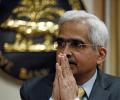
Reserve Bank Governor Shaktikanta Das said on Monday that fair and impartial auditing is essential for a resilient economy as it instils confidence among citizens. Addressing officers at the National Academy of Audit and Accounts, Das said that audit is important for the country as public expenditure decisions are based on these reports. Observing that there is a need to improve the quality and depth of audit, he said the Reserve Bank has taken a host of steps in consultation with the Institute of Chartered Accountants of India (ICAI) for improving the audit of banks and financial institutions.
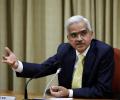
RBI Governor Shaktikanta Das on Wednesday defended the Reserve Bank's handling of the price situation, saying acting prematurely on inflation would have exerted a heavy cost on the economy and citizens. Acknowledging that the inflation target has been missed, Das said the RBI decided to support the economy by not introducing a rate hike in face of a spike in inflation. "We prevented a 'complete collapse of the economy' by keeping rates lower and stayed away from premature tightening," Das said speaking at the annual FIBAC conference of bankers in Mumbai.

RBI cuts GDP growth projection to 6.6 per cent for current financial year, from earlier forecast of 7.2 per cent.

Senior bankers anticipate discussions on issues related to technology, cyber security, and customer protection.

RBI Governor Shaktikanta Das said that early containment of the pandemic could impart an "upside" to the economic growth outlook.
RBI Governor Shaktikanta Das on Friday said the government and the central bank are in discussion with South Asian countries to have cross-border trade in rupee. He also said the central bank digital currency (CBDC) is in trial phase and the RBI is moving very carefully and cautiously on digital rupee launch. After the successful launch of the wholesale pilot, the Reserve Bank of India (RBI) on December 1, last year, began its retail CBDC pilot project.
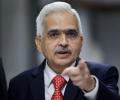
RBI Governor Shaktikanta Das on Friday called upon G20 nations to resolutely address the challenges, like threats to financial stability and debt distress that confront the global economy. Addressing the inaugural session of the meeting of G20 finance ministers and central bank governors, Das said although the outlook for the global economy has improved in recent months and there is now greater optimism that the world may avoid a deep recession and only experience slow growth or softer recession,"yet uncertainties lie ahead of us." "Together we must resolutely address the challenges that confront us, including those that are of medium to long-term nature such as threat to financial stability, debt distress, climate finance, fractures in global trade and strains on global value chains.

The Reserve Bank of India on Thursday decided to keep the policy rate unchanged for the ninth time in a row, saying food inflation remains stubborn. The rate increase cycle was paused in April last year after six consecutive rate hikes, aggregating to 250 basis points since May 2022.

India needs to limit its reliance on multinational corporations (MNCs) for strategic audits and consulting in order to strengthen its economic sovereignty and achieve the goal of Atmanirbhar Bharat, the Ministry of Corporate Affairs (MCA) said in an office memorandum released on Wednesday.
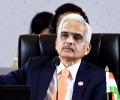
Reserve Bank governor Shaktikanta Das on Friday cautioned banks against any build-up of asset-liability mismatches, saying both are detrimental to financial stability and hinted that the ongoing crisis in the US banking system seems to have emanated from such mismatches. Delivering the annual KP Hormis (Federal Bank founder) commemorative lecture in Kochi this evening, the governor was quick to acknowledge and assure that the domestic financial sector is stable and the worst of inflation is behind us. Amid the continuing volatility in exchange rates, especially due to the excessive appreciation of the US dollar, and its impact on the external debt servicing ability of nations, Das said, "We have nothing to fear as our external debt is manageable and thus appreciation of the greenback does not pose any problem to us."
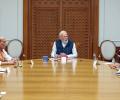
Shah briefed the prime minister on the attack and discussed the measures to be taken in its aftermath.
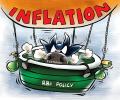
"We have to stand in readiness to go beyond keeping Arjuna's eye to deploying policy instruments, if necessary" to contain inflation, said Reserve Bank Governor Shaktikanta Das on Thursday. Headline consumer price index-based inflation projection for the second quarter of 2023-24 has been revised up substantially, primarily due to the price shock from vegetables, at 6.2 per cent by the RBI form 5.2 per cent estimated in June. Unveiling the bi-monthly monetary policy, Governor Das said the moderation in headline inflation to 4.6 per cent in the first quarter of 2023-24 was in line with the projections set out in the June MPC meeting.

'Sharing ideas is a powerful way to solve the world's challenges. Thanks for your insights Bill Gates!'

Reserve Bank Governor Shaktikanta Das on Wednesday said in the wake of appreciating US dollar, the movement of rupee has remained least disruptive as compared to its peers, and the size of foreign exchange reserve is comfortable. On a financial year basis (from April to October 2022), the rupee has appreciated by 3.2 per cent in real terms, even as several major currencies have depreciated, he said while announcing the latest set of bi-monthly monetary policy. "The story of the rupee has been one of India's resilience and stability," the Governor said while pointing out that the appreciation of the US dollar this year, which precipitated large-scale depreciation of all major global currencies including the Indian rupee, has drawn wide attention.

Sanjay Malhotra on Wednesday took charge as the 26th Governor of the Reserve Bank of India. Malhotra, a career bureaucrat, arrived at the central bank's headquarter this morning, where he was welcomed by senior RBI staffers. The central bank confirmed Malhotra's appointment through a post on the microblogging site "X" and also shared a few pictures.
Reserve Bank Governor Shaktikanta Das on Friday said that this stage would have been "premature" and "very very risky" as the retail inflation is still high, and future monetary policy action would depend upon the income data and outlook. Earlier this month, the RBI continued to maintain the status quo in the short-term lending interest rate (repo), citing inflationary concerns, though it changed the monetary policy stance to neutral.

The government on Monday appointed Revenue Secretary Sanjay Malhotra as the 26th Governor of the Reserve Bank of India. The Appointments Committee of the Cabinet cleared Malhotra's name, who has been appointed as the RBI Governor for three years, starting Wednesday. Malhotra, a 1990 Batch Rajasthan Cadre IAS Officer, will replace Shaktikanta Das, whose tenure ends on Tuesday (December 10, 2024).

When it comes to running between the wickets -- which is exactly what an FM and a governor do -- Jadeja always defers to Dhoni's larger judgement of the situation and the needs of the team, observes T C A Srinivasa-Raghavan.
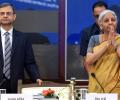
Sanjay Malhotra takes charge as the 26th RBI governor at a time when headline retail inflation has shot up to 6.2%.

India's foreign exchange reserves have jumped to an all-time high of $651.5 billion as of May 31, Reserve Bank Governor Shaktikanta Das said on Friday. This means the overall kitty has increased by $4.83 billion since the last reported number of $646.673 billion on May 24 this year.
RBI Governor Shaktikanta Das on Thursday said financial inclusion will continue to be a "policy priority" for the central bank to make the post-pandemic recovery more equitable and sustainable. The Reserve Bank of India will very soon be coming out with the first financial inclusion index, which will assess progress in terms of access, usage and quality, Das said, while speaking at the Economic Times Financial Inclusion Summit. It is the responsibility of all stakeholders to ensure that the financial ecosystem (including the digital medium) is inclusive and capable of effectively addressing risks like mis-selling, cybersecurity, data privacy and promoting trust in the financial system through appropriate financial education and awareness, he added.
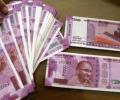
Reserve Bank Governor Shaktikanta Das on Thursday said about 50 per cent of Rs 2,000 notes in circulation has come back in the banking system since the RBI announced withdrawal of the highest denomination currency last month. As on March 31, 2023, he said, Rs 2,000 notes worth Rs 3.62 lakh crore were in circulation. "So far, Rs 1.80 lakh crore have come back after the announcement," he said during an interaction with media after releasing the bi-monthly monetary policy here.

The Reserve Bank of India on Thursday projected a GDP growth of 7 per cent for 2024-25 financial year, which is lower than the 7.3 per cent expansion estimated for the current fiscal. Announcing the bi-monthly monetary policy, RBI Governor Shaktikanta Das said rural demand continues to gather pace, urban consumption remains strong and investment cycle is gaining steam on the back of increased capex.

Reserve Bank Governor Shaktikanta Das on Wednesday said that RBI is monitoring the situation regularly with regard to the withdrawal of Rs 2,000 currency notes and expressed confidence that the entire exercise will be completed in a non-disruptive manner. The Reserve Bank of India (RBI) on Friday announced the withdrawal of Rs 2000 denomination banknotes as part of its currency management and permitted the exchange of Rs 2000 currency notes up to Rs 20,000 in one go from Tuesday onwards. The exchange or deposit window is available until September 30, 2023.
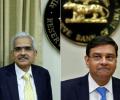
When did Urjit Patel really resign? When did Shaktikanta Das get the mandate to take over as RBI governor?

The Reserve Bank on Friday retained GDP growth forecast of 7 per cent for 2024-25 financial year, lower than the 7.6 per cent expansion estimated for FY24. In its February monetary policy, the RBI had projected the GDP growth rate of 7 per cent for the financial year beginning April 1. Announcing the current fiscal's first bi-monthly monetary policy, RBI Governor Shaktikanta Das said the rural demand is gathering pace, and sustained growth in manufacturing sector should boost private investment.

The Reserve Bank of India (RBI) does not target any price level on the rupee, Governor Sanjay Malhotra reiterated at an International Monetary Fund and World Bank event on Wednesday.

Vegetable rates may ease from September, led by tomato prices, which have started showing signs of correction on the back of increased supply, Reserve Bank of India (RBI) Governor Shaktikanta Das said on Wednesday. "Looking ahead, the spike in vegetable prices in July is starting to see a correction, led by tomato prices. "New arrivals of tomatoes in mandis are already softening the prices, coupled with proactive supply management in the case of onions.

'After a long time, we have a governor who is approachable. The RBI's interactions with us are now much better.'

The continuing global uncertainity has complicated the fight against inflation, opined Reserve Bank Deputy Governor Michael Debabrata Patra during the Monetary Policy Committee meeting held on February 8. According to the minutes of the MPC meeting released on Wednesday, RBI Governor Shaktikanta Das also mentioned that there is considerable uncertainty due to a host of global factors such as rising non-oil commodity prices. The RBI on February 8 hiked the key short-term lending rate by 25 basis points to 6.5 per cent, citing sticky core inflation.
Reserve Bank Governor Shaktikanta Das on Thursday described cryptocurrencies as "clear danger" and said that anything that derives value based on make believe, without any underlying, is just speculation under a sophisticated name. The government is in the process of finalising a consultation paper on cryptocurrencies after gathering inputs from various stakeholders and institutions. Reserve Bank of India (RBI) has been flagging concerns about cryptocurrencies, which are seen as a highly speculative asset.
Reserve Bank of India (RBI) Governor Shaktikanta Das had stumped the market in the previous two policies - in August and in October - first with action and then with words. In August, it was the introduction of an incremental cash reserve ratio (I-CRR) to take out excess liquidity, which took the markets by surprise. In October, there was no action. Rather, what is known as "open mouth operation", Das' comment that the central bank might conduct open market operations (OMOs) by selling bonds tempered the euphoria in the bond markets after JP Morgan's inclusion of India in its Emerging Market Bond Index.
He said the impact of the second wave of COVID-19 has waned by August,and economic growth will be better from the second quarter onward on a sequential basis. Speaking at an event organised by The Indian Express and Financial Times, Das said the RBI has decided to give more emphasis on growth because of the pandemic and operate in the 2-6 per cent inflation band set by the government for it. The central bank will seek to gradually move towards achieving the 4 per cent target over a period of time, he said, adding that the possibility of a sustained increase in inflation is unlikely.
The Reserve Bank on Friday said India is poised to become the growth engine of the world as it retained the GDP projection for the current fiscal at 6.5 per cent. Unveiling the bi-monthly monetary policy review, Reserve Bank of India (RBI) Governor Shaktikanta Das said the domestic economy exhibits resilience on the back of strong demand.
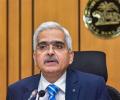
The Reserve Bank of India on Thursday decided to keep policy rate unchanged for the sixth time in a row as it maintains a tight vigil on inflation. The rate increase cycle was paused in April last year after six consecutive rate hikes aggregating to 250 basis points since May 2022.

The number of digital financial frauds rose more than four times in FY24 year-on-year to comprise 80 per cent of all financial frauds.

Deputy Governor Michael Patra warned about the spillover effects of food inflation.
